
100 years
Articles
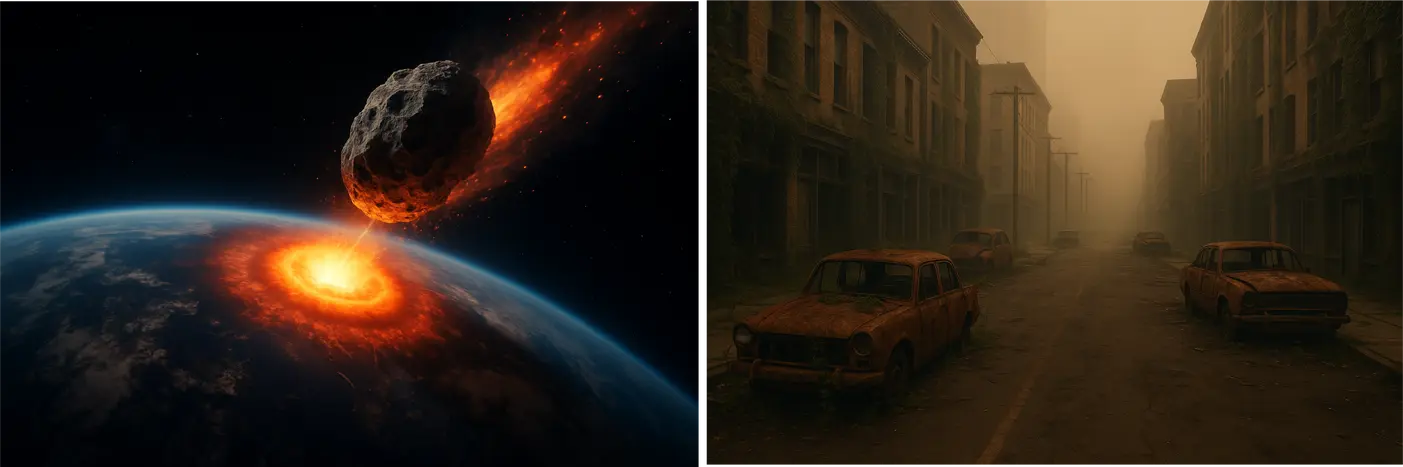
Is this the future of the next 100 years and beyond?
The idea of humanity surviving the next three centuries resembles a journey into uncharted territory. We are living in an age where predictions feel less like calculations and more like reaching into fog. The tectonic shifts of our time—ecological, technological, social—create an atmosphere of constant acceleration. Few generations before us have had to confront the possibility that they might be the turning point of an entire planetary narrative. Humanity has proven itself capable of incredible adaptation, yet it remains the architect of its own greatest risks. Logic suggests that a profound and lasting improvement of human behavior is unlikely—not because we lack the knowledge, but because we lack the capacity or the will. Civilizational inertia, conflicting interests, political short-sightedness, and the complexity of global systems constrain our ability to think long-term. These are not moral failings, but structural limitations of a species evolved to respond to immediate threats rather than distant horizons.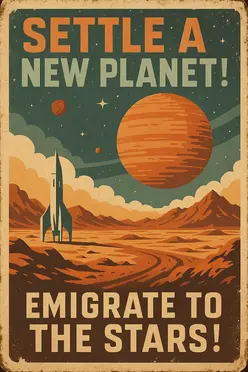
In the world of *Paradies 4.0*, this truth forms a dramatic backbone: The threat is not an alien invader or a cosmic force, but the accumulated weight of human choices, habits, and systems. Progress and collapse lie so close together that they blur into one another. Humanity stands on a razor’s edge—between technological transcendence and existential exhaustion, between the promise of immortality and the risk of self-destruction.
And yet, a quiet form of hope persists—not as naive optimism, but as a subtle, resilient phenomenon. History is filled with moments where the impossible suddenly became reality. Perhaps the future does not require humanity to become perfect, but to learn to coexist with its own contradictions. Perhaps the next evolutionary step will not be technological but existential: an understanding of what it means to be fragile, thinking beings in a vast and indifferent universe.
The future may be frightening—but it remains unwritten. And in that uncertainty lies its dramatic power.