
The next 100 years of humanity
Texte
The Future of the Next 100 Years – and Beyond / The Future of the Next 100 Years – and Beyond
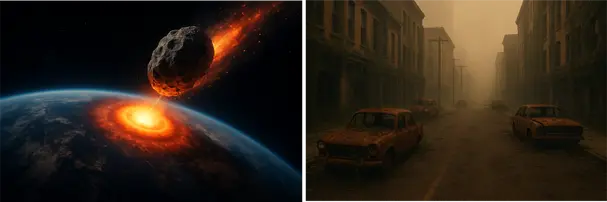
Is this what the next 100 years – and beyond – will look like?
Over the past few centuries, humankind has shown itself to be the master of change, but at the same time the architect of its greatest risks. The logic of the present suggests that genuine, comprehensive improvements in our behaviour are hardly to be expected. Not because we are incapable of knowing how – but because we are unwilling or unable to do so. Civilisational inertia, competing interests, the short-sightedness of political systems and the sheer complexity of global interdependencies are hindering any attempt to think in the long term. These factors are not moral failings, but structural limitations of a species programmed to react to immediate dangers rather than look towards distant horizons.
In the world of *Paradise 4.0*, this realisation forms the dramatic foundation: the threat is not an external enemy, but the sum of human decisions, habits and systems. Progress and ruin lie so close together that they seem almost indistinguishable. Humanity teeters between technological triumph and existential exhaustion – between the promise of immortality and the risk of self-destruction. Yet a glimmer of hope remains – not as naïve optimism, but as a quiet yet persistent phenomenon. Time and again throughout history, there have been moments when seemingly impossible turns of events have occurred. Perhaps the future does not lie in humanity completely improving itself, but in learning to live with its own shadows. Perhaps the next stage of evolution will not be a technological upgrade, but an understanding of what it truly means to be a fragile, thinking being in the face of the universe.
The future may be frightening – but it remains open. And that is precisely where its dramatic power lies.